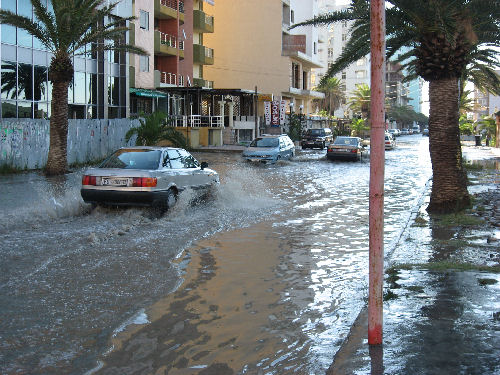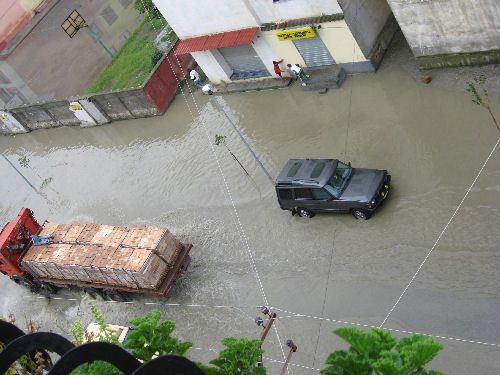
September starts the rainy season.  The lightening storms are spectacular and usually very intense. As we enter into this moderately wet period, some of impacts of building in a drained swamp become apparent. Ancient Durres was an island city with the sea on the south and west and a large lagoon to the east. This arrangement allowed access only from a narrow strip of land along the southeast and from the north. Over time, a passage from the lagoon to the sea was constructed and this changed the hydrology such that the lagoon silted up and became a swampy marsh. This marsh was drained in the 1960s and parts of Durres have been built in this drained marshland.
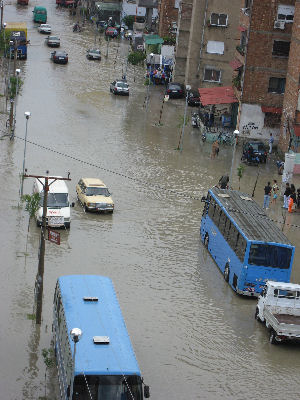 With only a moderate rain, the road in front of our house becomes a river about knee deep. Thus explaining why the shops have a steep set of steps from the sidewalk to the door. In front of the apartment building just east of us, buses pick up factory works and shuttle them to the other side of town. This morning, after a moderate rain, the water was up the bumper of the bus and as the doors opened, the first step was under water. Only a few workers made it to the buses today and the school at the corner just has a delayed opening on days like this. It is amazing how quickly things become normal – Criss did not even take pictures of today’s high water mark.
Just earlier in the week, Criss had seen a couple of SUV with the raised air intake and thought that was really overkill for the city. However, after watching many cars stall out in the high water, an SUV would not be a bad choice. Another hazard of driving in this environment has become obvious. We have noticed drivers will generally not drive through water puddles. This is because manhole covers and storm water grates seem to be optional. However on days like this, there is no choice and drivers just drive by memory. You can spot the drivers that are new to the area; they are the ones standing beside their awkwardly aligned vehicle waiting on help. Yes this is generally hard on tires and undercarriage.